Introduction: Efficiency Starts Beyond the Compressor
Many industries invest heavily in high-quality air compressors but overlook a component that significantly affects performance — the air receiver tank. While compressors generate compressed air, air receiver tanks optimize how that air is stored, delivered, and utilized.
When correctly integrated into a compressed air system, air receiver tanks can reduce energy costs, improve pressure stability, and protect compressor spare parts from excessive wear.
Understanding the Role of an Air Receiver Tank
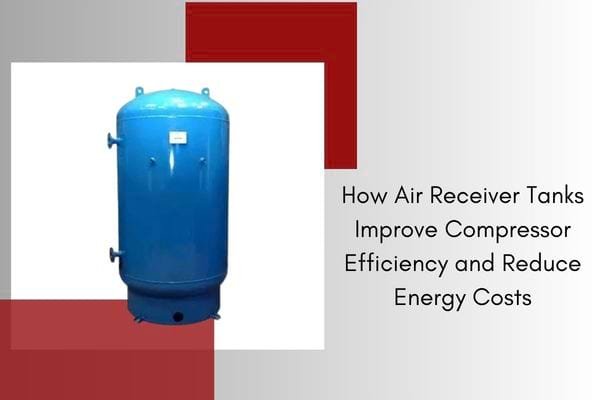
An air receiver tank acts as a buffer between the air compressor and downstream applications. It stores compressed air and releases it as required, ensuring steady pressure even during peak demand.
👉 For a deeper understanding, refer to our related blog:
How Air Receiver Tanks Improve Air Compressor Efficiency
1. Reduced Compressor Cycling
Without a receiver tank, the compressor starts and stops frequently to meet sudden air demand. This frequent cycling:
- Increases power consumption
- Causes mechanical stress
- Shortens compressor lifespan
An air receiver tank reduces these cycles by supplying stored air during short demand spikes.
2. Stable Pressure Across Applications
Pressure fluctuations force compressors to operate at higher set points, wasting energy. Receiver tanks stabilize pressure, allowing compressors to operate at optimal PSI levels.
This directly improves efficiency in:
- Pneumatic tools
- Packaging lines
- Automation systems
3. Lower Energy Consumption
Every unnecessary compressor start consumes excess electricity. By acting as a pressure buffer, air receiver tanks help reduce:
- Power surges
- Peak load demand
- Overall energy bills
Industries often observe 10–25% energy savings after installing correctly sized receiver tanks.
4. Improved Moisture Separation
As compressed air cools inside the receiver tank, moisture condenses and settles. This reduces water carryover into pipelines, protecting:
- Air dryers
- Valves and regulators
- Air compressor spare parts
 Learn more in our blog:
Energy Cost Reduction Through Proper Tank Sizing
Efficiency gains depend heavily on correct tank sizing. An undersized tank leads to:
- Frequent compressor starts
- Pressure instability
- Energy wastage
A properly sized tank ensures smooth airflow and minimal power loss.
👉 Related reading:
Impact on Compressor Spare Parts & Maintenance
Lower cycling and stable pressure directly reduce wear on:
- Pistons
- Bearings
- Seals
- Valves
This means:
- ✅ Longer spare parts life
- ✅ Lower maintenance costs
- ✅ Reduced downtime
Using genuine air compressor spare parts ensures compatibility and safety across the system.
Integration with Industrial Air Compressor Systems
Air receiver tanks work seamlessly with:
- Rotary screw air compressors
- Reciprocating air compressors
- High pressure air compressors
When combined with dryers, filters, and pressure regulators, they significantly improve system efficiency.
Explore industrial-grade solutions here: 👉
Industrial Air Compressors
Interested in Our
Air Compressor & Spare Parts
Explore our extensive range of Industrial Compressor, including service and a robust support network, along with genuine Compressor Spare Parts designed to fulfill your exact requirements.
Get Best Quote
Why Manufacturers Recommend Air Receiver Tanks
As an air compressor and air receiver tank manufacturer, supplier, and exporter, we recommend receiver tanks because they:
- Optimize compressor performance
- Improve energy efficiency
- Enhance system safety
- Support future expansion
They are a low-cost upgrade with long-term operational benefits.
Industries That Benefit the Most
Air receiver tanks deliver measurable value in:
- Manufacturing plants
- Pharmaceutical units
- Food processing facilities
- PET bottle production
- Automotive workshops
- Packaging and automation lines
In all these sectors, energy efficiency and pressure stability directly impact profitability.
Conclusion: Small Component, Big Savings
Air receiver tanks may seem secondary, but their impact on compressor efficiency and energy savings is substantial. By reducing cycling, stabilizing pressure, and protecting spare parts, they help industries achieve lower operating costs and longer equipment life.
Investing in a properly designed air receiver tank from a trusted manufacturer is a smart move toward a more efficient compressed air system.
Conclusion: Right Size, Right Performance
Air receiver tank sizing directly impacts pressure stability, energy efficiency, and equipment life. A correctly sized tank reduces system stress and enhances productivity across industries.
By working with an experienced air compressor and air receiver tank manufacturer, you ensure your compressed air system is not only powerful—but also efficient, safe, and future-ready.