
Air Receiver Tank Sizing: How to Calculate the Right Capacity for Your Compressor System
Introduction: Why Air Receiver Tank Sizing Matters
An air receiver tank is not just a storage vessel—it’s a pressure stabilizer that directly affects compressor performance. Incorrect tank sizing can lead to frequent compressor cycling, pressure drops, energy losses, and premature wear of compressor spare parts.
For industrial applications, selecting the right air receiver tank capacity ensures consistent airflow, reduced load on the compressor, and lower operating costs. As a manufacturer and exporter of air compressors and air receiver tanks, proper sizing is one of the most common—and most critical—decisions we help customers make.
What Is an Air Receiver Tank?
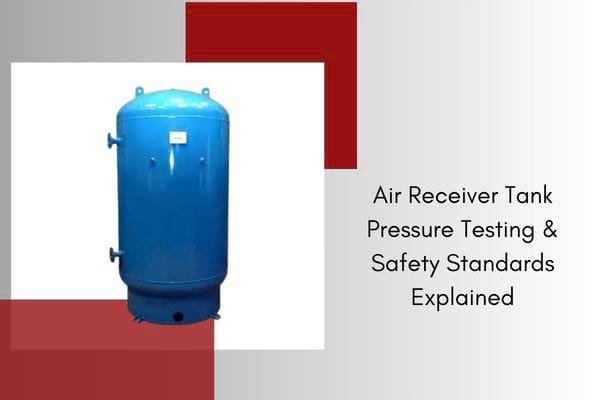
An air receiver tank stores compressed air between the compressor and end-use applications. It helps to:
- Smooth pressure fluctuations
- Meet short-term peak air demand
- Reduce compressor start/stop cycles
- Improve moisture separation
In short, it acts as a buffer that stabilizes the entire compressed air system.
Problems Caused by Incorrect Air Receiver Tank Sizing
Choosing the wrong tank size can result in:
- ❌ Frequent compressor cycling
- ❌ Unstable pressure at machines
- ❌ Increased energy consumption
- ❌ Moisture carryover into pipelines
- ❌ Shortened compressor and spare parts lifespan
That’s why air receiver tank sizing should always be calculated—not guessed.
Key Factors That Affect Air Receiver Tank Sizing
1. Compressor Capacity (CFM)
CFM (Cubic Feet per Minute) determines how much air your compressor delivers. Higher CFM generally requires a larger receiver tank to store sufficient air volume.
2. Operating Pressure (PSI / Bar)
Higher pressure systems need stronger and properly rated tanks. Pressure rating affects both safety and usable air volume.
3. Air Demand Pattern
- Continuous usage: Smaller tank may suffice
- Intermittent or peak usage: Larger tank required
Industries with sudden air demand spikes benefit most from correctly sized tanks.
4. Compressor Type
- Reciprocating air compressors require larger tanks
- Rotary screw compressors often need smaller buffers due to continuous airflow
How to Calculate Air Receiver Tank Capacity
A widely used industry formula is:
Tank Volume (Liters) = (CFM × 60 × Pressure Drop) ÷ Operating Pressure
For practical selection:
- Small workshops: 3–5 gallons per CFM
- Industrial plants: 6–10 gallons per CFM
- High-demand applications: Custom engineered sizing
Manufacturers often recommend tank sizing based on real operating conditions, not theoretical numbers.
Standard Air Receiver Tank Sizes Used in Industry
Common industrial air receiver tank capacities include:
- 250 liters
- 500 liters
- 1000 liters
- 2000 liters
- 3000 liters and above (custom-built)
As an exporter, offering custom-fabricated air receiver tanks allows industries to optimize performance based on exact compressor and application requirements.
Interested in Our
Air Compressor & Spare Parts
Explore our extensive range of Industrial Compressor, including service and a robust support network, along with genuine Compressor Spare Parts designed to fulfill your exact requirements.
Get Best QuoteBenefits of Proper Air Receiver Tank Sizing
When sized correctly, an air receiver tank delivers:
- Stable air pressure
- Lower energy consumption
- Reduced compressor wear
- Improved moisture separation
- Longer life of compressor spare parts
- Better overall system efficiency
It’s one of the simplest ways to improve compressed air system performance without upgrading the compressor itself.
Integration with Compressor Spare Parts & Accessories
Air receiver tanks work best when paired with:
- Pressure regulators
- Safety relief valves
- Auto drain valves
- Air dryers and filters
- Pressure gauges
Using compatible, manufacturer-approved compressor spare parts ensures safe operation and easy maintenance.
Choosing the Right Air Receiver Tank Manufacturer
When selecting an air receiver tank supplier, look for:
- Certified pressure vessel manufacturing
- Compliance with IS / ASME / CE standards
- Proper pressure testing & documentation
- Custom sizing support
- Export-quality finishing and coating
A reliable air compressor manufacturer and supplier provides both the tank and system-level expertise.
Conclusion: Right Size, Right Performance
Air receiver tank sizing directly impacts pressure stability, energy efficiency, and equipment life. A correctly sized tank reduces system stress and enhances productivity across industries.
By working with an experienced air compressor and air receiver tank manufacturer, you ensure your compressed air system is not only powerful—but also efficient, safe, and future-ready.